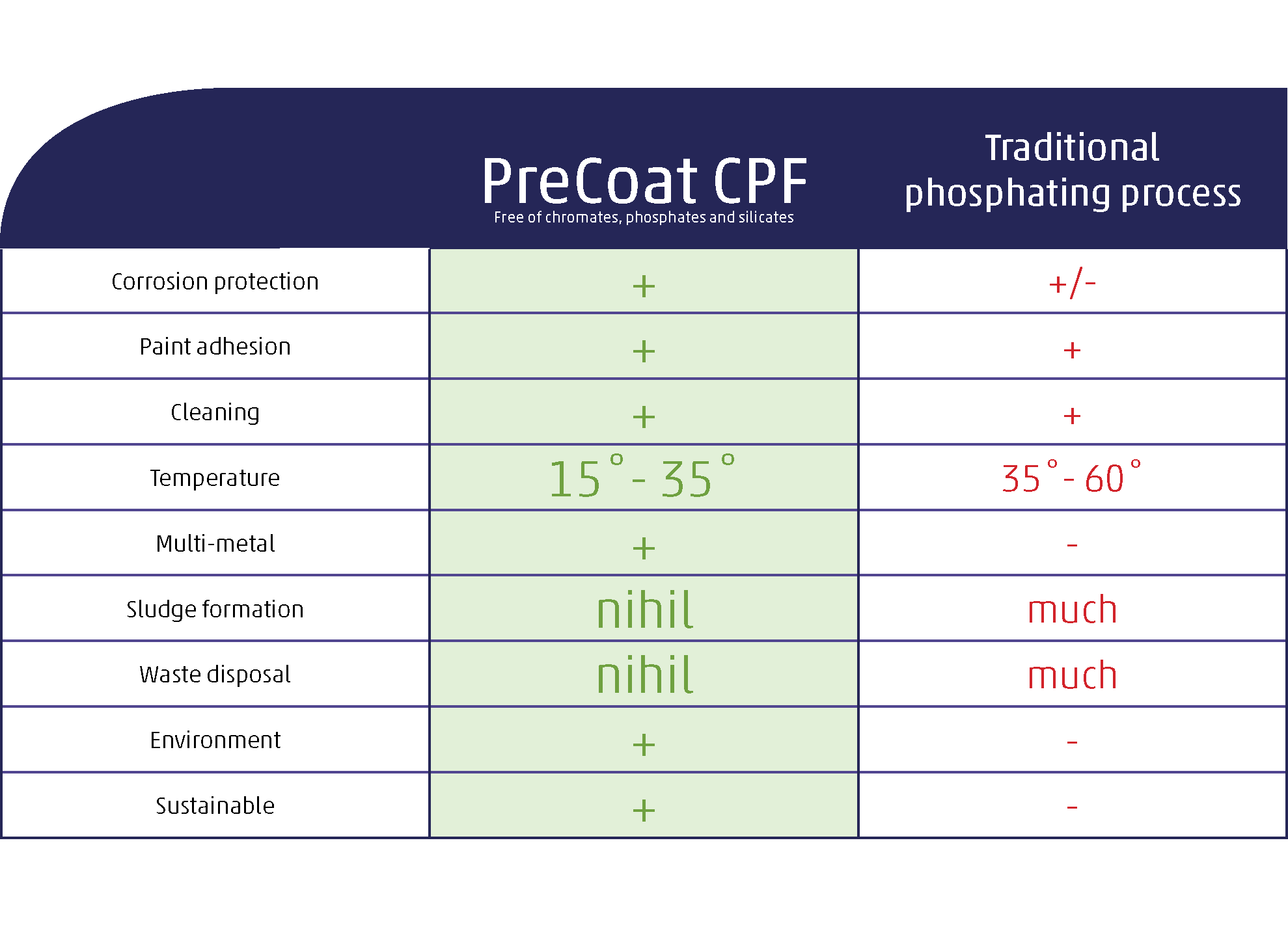
To save extra costs, PreCoat CPF can also be used at significantly lower temperatures; 15-30 degrees Celsius instead of traditional phosphating processes that run at around 50 degrees.
“With the current application of PreCoat CPF, we no longer have production rejections.”
– Cor Huigenbos, Director of Allround Zonwering
PreCoat CPF can replace any standard iron phosphating process, including:
- Spray installations
- Dipping baths
- Washing machines
- Pressure washers
“Currently, we have noticed that we no longer experience downtime during repair and maintenance work, saving us €5,000 to €10,000 in costs.”
– Cor Huigenbos, Director of Allround Zonwering
PreCoat CPF x Allround Zonwering – The Benefits
To provide a clear overview of the benefits, AD Chemicals conducted an interview with Cor Huigenbos, Director of Allround Zonwering (sunscreen manufacturer).
Allround Zonwering is a company producing outdoor sun protection solutions with 80 to 90 employees for the Dutch, Belgian, French, and German markets. The company manufactures around 1,000 square meters of a wide variety of products daily. These products include aluminum, galvanized steel, and stainless steel. The transition to using PreCoat CPF for powder coating took place around May 2022.
Why did you choose AD?
We had been searching for a while for an alternative chemical pretreatment to replace etching, prioritizing working temperature, machinery preservation, speed, and precise control over product quality. We were also looking for a product suitable for extrusion aluminum, die-cast aluminum, ZAMAK alloy, and stainless steel. In short, the AD product is a perfect solution for all of these aspects, of which I didn’t find many alternatives.
How was the transition to PreCoat CPF?
Before starting, we conducted initial trials and ran (extended) tests, supervised by AD Chemicals’ expert, Alfred Stegeman. A few weeks later, based on the test results, we could make an easy comparison between our current and the proposed chemical treatment, making the choice easy. Given the significant demonstrated improvements, we immediately decided to make the transition.
Our installation consists of a takt system powder coating line where the pre-treatment includes PreCoat CPF. The process tank is replenished from the subsequent rinse tank, and the rinse tank is replenished with fresh water. This results in a closed system, meaning that only evaporation and a small amount of leakage water is lost in the process. This results in the fact that we actually need low additions of water and chemistry.
Which products benefit most from PreCoat CPF?
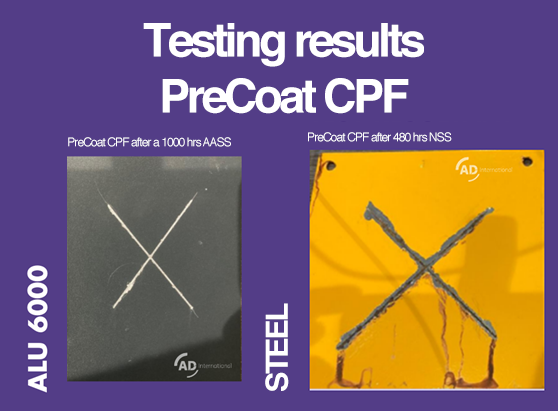
We mainly had problems with die-cast aluminum and ZAMAK products. These are the most sensitive products to corrosion and require the most attention. The AD product significantly outperformed on these products during testing. After transitioning to PreCoat CPF, we no longer receive complaints about visible corrosion.
How did you save on your phosphating process with PreCoat CPF?
We achieved multiple savings:
- Reduction in chemical procurement costs (about 25%)
- Reduction in rinse water consumption
- Reduction in energy costs for bath heating (about 50%)
- Decrease in maintenance costs for the installation
So far, we have saved about 25 percent on chemical costs. We have also saved on rinse water and reduced energy costs by 50 percent due to temperature reduction. Previously, we used an etching-based pre-treatment, the aggressive nature of this type of chemicals led to significant maintenance of the entire installation. We have noticed that we no longer experience downtime during repair work and save €5,000 to €10,000 in maintenance costs.
With AD’s chemistry, the process steps could be reduced and we still achieve good results. Quality remains guaranteed, allowing significant time savings. The concentration operation window of the chemical bath with PreCoat CPF is wide. Enabling a long bath life before it leads to worrisome quality, making the entire process well-manageable and certainly prevents some stress for our production department from time to time.